


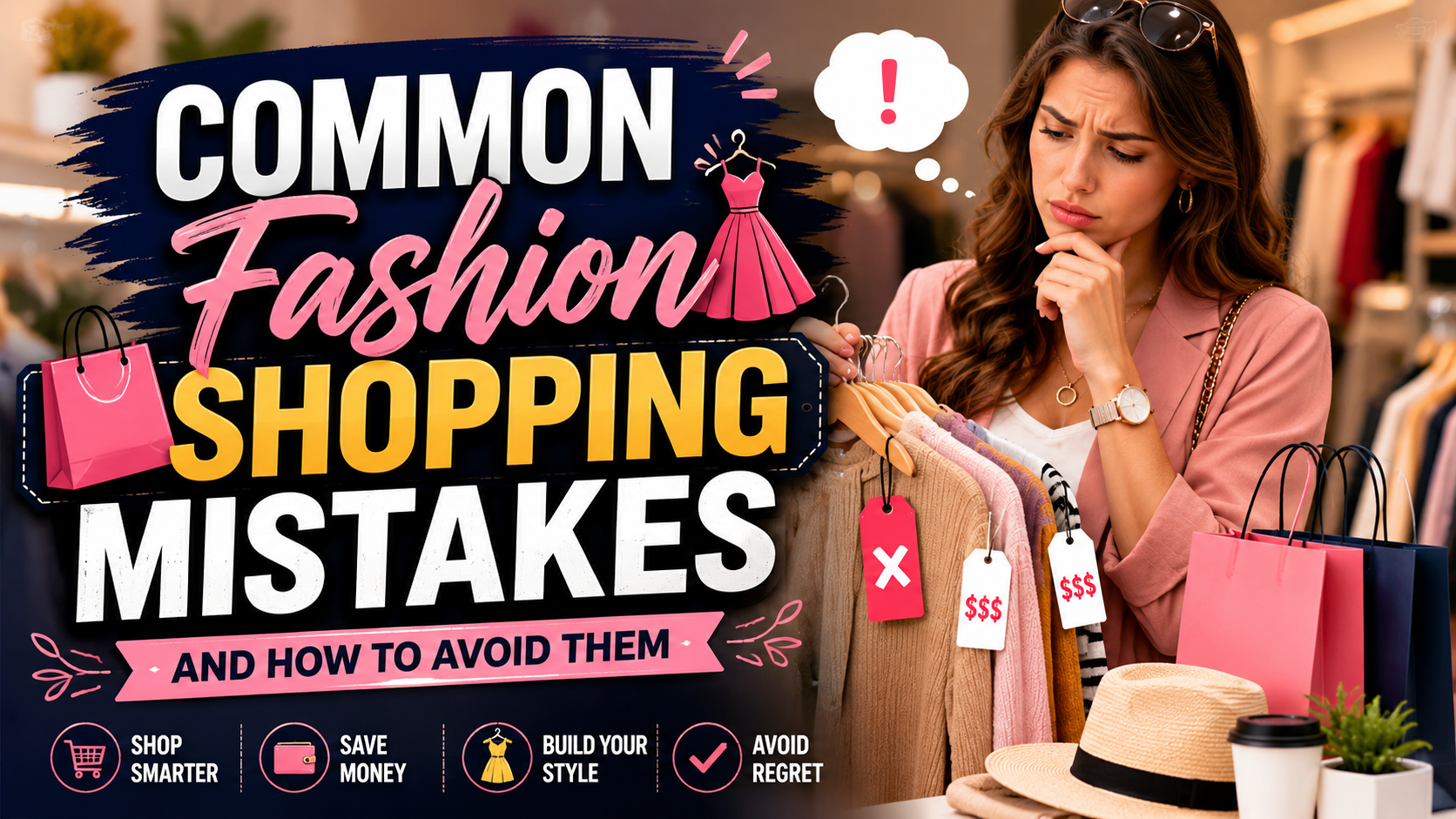
Fashion shopping looks simple on the surface, but many people end up wasting money, buying the wrong sizes, or choosing outfits they never actually wear. The truth is, most fashion mistakes are not about style—they are about poor shopping decisions.
This complete guide explains the most common fashion shopping mistakes and shows you simple, practical ways to avoid them. Everything is written in clear, easy language so anyone can follow and improve their shopping habits instantly.
Why Smart Fashion Shopping Matters
Buying clothes is not just about looking good. It also affects your budget, confidence, and comfort in daily life.
Good fashion shopping helps you:
- Save money by avoiding unnecessary purchases
- Build a wardrobe that actually matches your lifestyle
- Improve your personal style over time
- Reduce clutter in your closet
- Feel more confident in your outfits
On the other hand, bad shopping habits lead to wasted money and a wardrobe full of unused clothes.
Mistake 1: Buying Clothes Without Planning
One of the biggest fashion shopping mistakes is buying clothes without a clear plan.
Many people enter a store or browse online and buy random items just because they look nice.
Why this is a problem
- Clothes don’t match your existing wardrobe
- You end up with unused outfits
- You waste money on similar items
- Your closet becomes disorganized
How to avoid it
Before shopping, ask yourself:
- What do I actually need right now?
- Do I need casual wear, office wear, or party outfits?
- What colors already dominate my wardrobe?
Simple shopping rule
Follow this method:
- Check your closet
- List missing items
- Buy only those items
Mistake 2: Ignoring Fabric Quality
Many shoppers focus only on design and forget about fabric quality.
Cheap-looking fabric may look good at first but wears out quickly.
Common low-quality fabrics issues
- Fading colors after a few washes
- Shrinking after washing
- Rough texture on skin
- Losing shape quickly
How to choose better fabric
Look for:
- Cotton (breathable and soft)
- Denim (strong and long-lasting)
- Linen (light and comfortable)
- Blended fabrics with durability
Quick fabric check table
| Fabric Type | Comfort | Durability | Best Use |
|---|---|---|---|
| Cotton | High | Medium | Daily wear |
| Denim | Medium | Very High | Jeans, jackets |
| Polyester | Medium | High | Sportswear |
| Linen | High | Medium | Summer outfits |
Mistake 3: Choosing Wrong Size for Style
Many people buy clothes thinking they will “fit later” or look better in a smaller size.
This is one of the most common and harmful mistakes.
Problems caused by wrong sizing
- Discomfort while wearing
- Poor body movement
- Unbalanced outfit look
- Reduced confidence
How to avoid sizing mistakes
- Always try clothes before buying
- Check size charts for online shopping
- Focus on body fit, not number size
- Understand your real measurements
Smart sizing tip
Clothes should fit your body today—not your future goals.
Mistake 4: Following Trends Blindly
Fashion trends change quickly. Buying every trending item can ruin your wardrobe balance.
Why trend-only shopping fails
- Clothes go out of style fast
- You may not like the item later
- Not all trends match your body type
- You spend money on short-term fashion
Better approach
Instead of chasing every trend:
- Choose 1–2 trendy items per season
- Mix trends with basic wardrobe pieces
- Focus on personal style first
Mistake 5: Ignoring Comfort for Looks
Many people choose clothes that look good but feel uncomfortable.
This often leads to clothes that are never worn again.
Signs of uncomfortable clothing
- Tight shoulders or waist
- Rough material
- Hard-to-move fabric
- Skin irritation
How to fix this mistake
- Always test movement before buying
- Sit, walk, and stretch in clothes
- Check fabric softness
- Prioritize comfort for daily wear
Mistake 6: Not Matching Clothes with Lifestyle
A major fashion mistake is buying clothes that don’t match your daily life.
For example, buying party outfits when you mostly stay at home or wear casual clothes.
Why this is a problem
- Clothes remain unused
- Wardrobe feels unbalanced
- Money is wasted on unnecessary items
Smart solution
Match clothing with your lifestyle:
| Lifestyle Type | Recommended Clothing |
|---|---|
| Student | Casual wear, sneakers, hoodies |
| Office worker | Formal shirts, trousers |
| Active lifestyle | Sportswear, breathable fabrics |
| Social events | Smart casual, dresses |
Mistake 7: Overlooking Color Coordination
Many people buy clothes in random colors that don’t match anything else in their wardrobe.
Common color mistakes
- Too many bright colors without balance
- Clothes that don’t match shoes or accessories
- Ignoring neutral basics
How to fix color choices
Build a simple color system:
- Neutral colors: black, white, grey, beige
- Accent colors: blue, red, green, brown
- Mix neutral + accent for balance
Example outfit combination
- White shirt + blue jeans + black shoes
- Beige jacket + black pants + white sneakers
Mistake 8: Shopping Without Budget Control
Impulse buying is one of the fastest ways to overspend on fashion.
What happens without a budget
- Unplanned purchases
- Financial stress
- Clothes you don’t need
- No long-term wardrobe plan
How to control spending
- Set monthly clothing budget
- Compare prices before buying
- Avoid emotional shopping
- Wait 24 hours before final purchase
Mistake 9: Ignoring Seasonal Needs
Some people buy clothes without thinking about weather conditions.
Seasonal shopping errors
- Buying thick clothes in summer
- Ignoring winter essentials
- Not having rain-friendly outfits
Seasonal wardrobe guide
| Season | Clothing Type |
|---|---|
| Summer | Light cotton, breathable fabrics |
| Winter | Jackets, sweaters, warm layers |
| Rainy | Waterproof shoes, quick-dry clothes |
Mistake 10: Not Checking Return Policies (Online Shopping)
Online shopping is convenient, but many buyers forget to check return policies.
Risks of ignoring return policies
- Wrong size with no return option
- Poor quality items stuck with you
- No refund support
Safe online shopping habits
- Always read return policy
- Check customer reviews
- Buy from trusted stores
- Start with small orders
Comparison Table: Smart vs Poor Fashion Shopping
| Factor | Smart Shopping | Poor Shopping |
|---|---|---|
| Planning | Always planned | Random buying |
| Budget | Controlled | Overspending |
| Style | Balanced wardrobe | Confused style |
| Quality | Focus on durability | Focus only on looks |
| Usage | Regular wear | Unused clothes |
Simple Fashion Shopping Strategy (Step-by-Step)
Follow this easy system to improve your shopping habits:
Step 1: Check your wardrobe
See what you already own.
Step 2: Identify missing items
Make a list of what you actually need.
Step 3: Set a budget
Decide how much you can spend.
Step 4: Choose quality first
Focus on long-lasting items.
Step 5: Match outfits properly
Make sure everything fits your wardrobe style.
Expert Tips for Smarter Fashion Shopping
- Invest more in basic essentials
- Buy versatile clothing that works with multiple outfits
- Avoid duplicate items
- Choose comfort over hype
- Build wardrobe slowly, not all at once
Future of Fashion Shopping
Fashion shopping is changing fast. People now prefer:
- Sustainable clothing
- Minimal wardrobes
- Online try-on technology
- Smart fashion recommendations
- Quality over quantity
Modern shoppers are becoming more thoughtful and less impulsive.
