


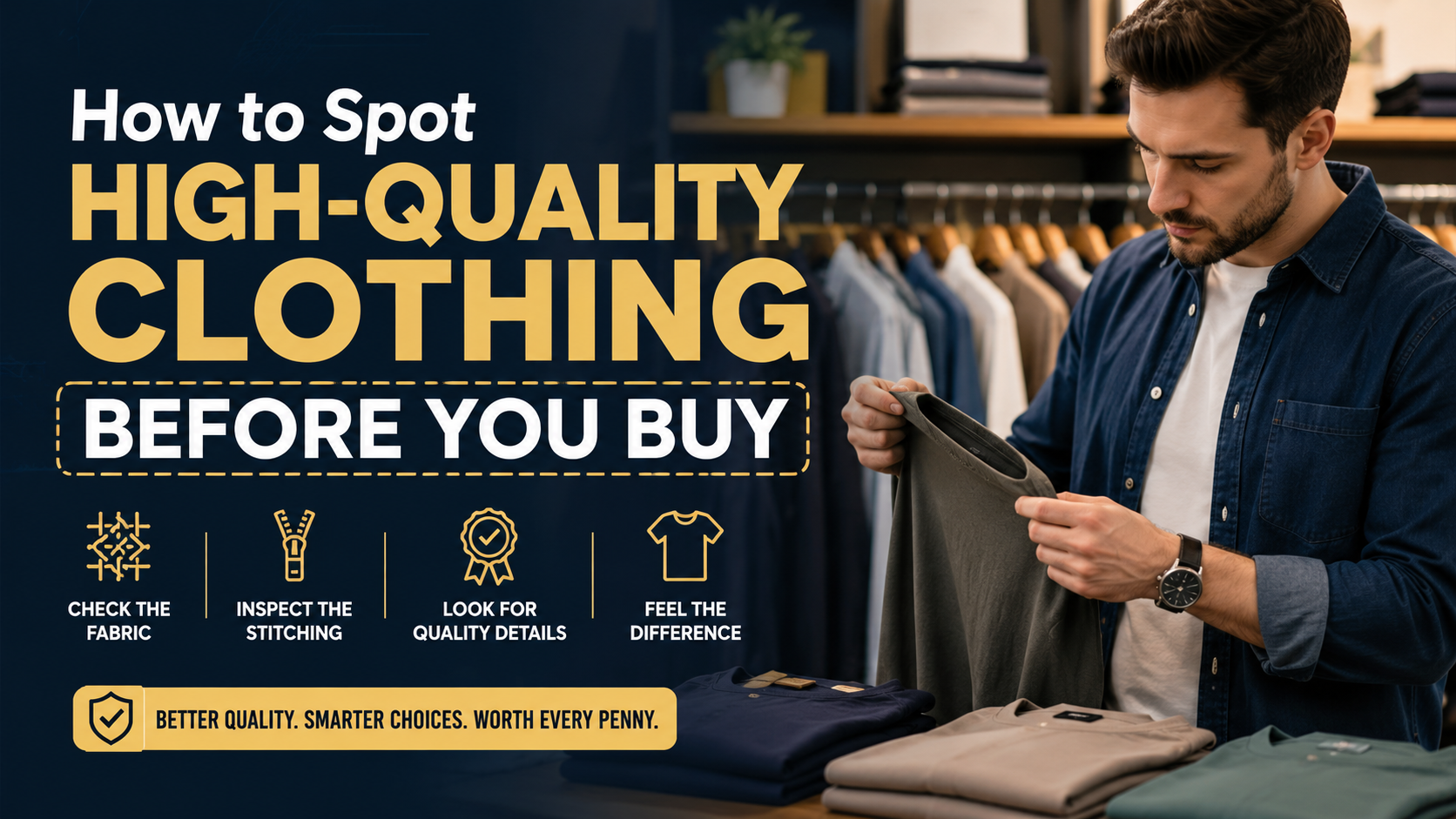
How to Spot High-Quality Clothing Before You Buy
Buying clothes may seem simple, but choosing the right quality is not always easy. Two shirts can look almost the same on a rack, yet one may last for years while the other fades, tears, or loses shape after a few washes. This is why learning how to spot high-quality clothing before you buy is an important skill.
Many people end up wasting money on clothes that look good at first but don’t last. Fast fashion makes this even harder because it focuses on cheap prices and quick trends instead of durability. On the other hand, well-made clothing may cost more but saves money in the long run.
In this guide, you will learn simple and practical ways to check fabric, stitching, fit, and other key details so you can confidently choose better clothes every time you shop.
Why Clothing Quality Really Matters
Clothing quality is not just about fashion. It affects comfort, durability, appearance, and even your long-term budget.
Main reasons quality matters:
- Clothes last longer and do not tear easily
- Fabric stays soft and comfortable after washing
- Colors do not fade quickly
- Clothes keep their shape over time
- You buy fewer replacements, saving money
When you understand quality, you stop buying based on looks alone and start buying based on value.
Fabric Quality: The First Thing You Should Check
Fabric is the most important part of any clothing item. Even perfect stitching cannot fix bad fabric.
How to check fabric quality quickly
When you touch the fabric, ask yourself:
- Does it feel soft or rough?
- Is it too thin or see-through?
- Does it feel strong or weak?
- Does it stretch and recover well?
Good fabric usually feels balanced—not too light, not too heavy.
Common high-quality fabrics
| Fabric Type | Features | Best Use |
|---|---|---|
| Cotton (High-grade) | Soft, breathable, durable | T-shirts, shirts |
| Linen | Light, airy, natural texture | Summer clothing |
| Wool | Warm, strong, long-lasting | Winter wear |
| Denim | Thick, durable, structured | Jeans, jackets |
| Silk | Smooth, premium feel | Formal wear |
Warning signs of low-quality fabric
- Feels very thin and flimsy
- Looks shiny in a cheap way
- Stretches too easily and does not return
- Feels rough or plastic-like
- Easily wrinkles after light handling
A simple rule: If it feels weak in your hands, it will not last in real life.
Stitching Quality: The Hidden Strength of Clothing
Stitching is what holds clothes together. Even good fabric can fail if stitching is weak.
What to look for in strong stitching
- Straight and even lines
- No loose threads hanging
- Tight seams without gaps
- Double stitching in stress areas
- Clean finishing inside the clothing
Areas where stitching matters most
Pay extra attention to:
- Shoulder seams
- Underarms
- Waistbands
- Pockets
- Buttons and zippers
These areas experience the most pressure during daily wear.
Quick stitching test
Gently pull the fabric at the seams. If:
- The seam opens slightly → weak quality
- It stays firm → good quality
Fabric Thickness and Weight
Clothing weight can tell you a lot about durability.
How weight affects quality
| Weight Type | What It Means |
|---|---|
| Too light | May tear easily, low durability |
| Medium weight | Balanced comfort and strength |
| Heavy weight | Strong, long-lasting but less breathable |
For example:
- A good T-shirt should feel light but not see-through
- A good hoodie should feel solid and structured
Checking Fit and Shape Retention
High-quality clothes are designed to keep their shape even after washing.
Signs of good shape retention
- Sleeves stay in place
- Neckline does not stretch out
- Waistbands stay firm
- Clothes do not twist after wash
Simple test before buying
Hold the clothing and gently stretch it. Then release it:
- If it quickly returns to shape → good quality
- If it stays stretched → poor quality
Button, Zipper, and Hardware Quality
Small details can reveal a lot about clothing quality.
Buttons
Good buttons:
- Are tightly stitched
- Do not feel loose
- Are made from strong material (not thin plastic)
Zippers
Check:
- Smooth movement
- No sticking or jam
- Strong metal or durable plastic
Cheap zippers often break first, even if the clothing is new.
Inside Finish: What Most People Ignore
The inside of clothes tells the real truth about quality.
What to check inside clothing
- Clean stitching without messy threads
- Proper lining (for jackets and coats)
- Neatly finished seams
- No exposed raw edges
High-quality brands always take care of the inside finish because it improves durability.
Color Quality and Dye Strength
Color fading is a common issue in low-quality clothing.
How to check color quality
- Rub the fabric lightly between fingers
- Check if color transfers
- Look for even dye distribution
- Avoid patchy or uneven shades
Signs of strong dye quality
- Rich, deep color tone
- No fading spots under light
- Consistent color across the fabric
Brand Label and Care Instructions
Labels may seem small, but they provide useful clues.
What to check on labels:
- Fabric composition (cotton %, polyester %, etc.)
- Washing instructions
- Country of manufacturing
- Brand transparency
If a label does not clearly mention fabric details, it may not be high quality.
Breathability and Comfort Test
Comfort is a major part of clothing quality.
Simple breathability test:
Hold the fabric up to light:
- If air passes easily → breathable and good
- If it blocks light completely → may feel hot
Breathable clothes are especially important for daily wear and warm climates.
Price vs Quality Reality
Many people assume expensive clothes are always better. That is not always true.
Simple comparison:
| Factor | Cheap Clothing | High-Quality Clothing |
|---|---|---|
| Price | Low | Higher |
| Durability | Short-term | Long-term |
| Comfort | Basic | High |
| Shape retention | Poor | Strong |
| Value over time | Low | High |
Important truth:
Good quality is not always expensive, but bad quality is always costly in the long run.
Fast Fashion vs Quality Clothing
Fast fashion focuses on trends, not durability.
Fast fashion traits:
- Cheap production
- Thin fabrics
- Weak stitching
- Short lifespan
Quality clothing traits:
- Strong materials
- Careful stitching
- Long-term design
- Better comfort
Smart Shopping Checklist Before Buying Clothes
Use this simple checklist before purchasing any clothing item:
Fabric Check
- Feels strong and comfortable
- Not too thin or rough
Stitching Check
- Even and tight seams
- No loose threads
Fit Check
- Maintains shape when stretched
- Comfortable movement
Hardware Check
- Strong buttons and zippers
- No weak attachments
Color Check
- No fading or patchy dye
- Even color tone
Common Mistakes People Make While Buying Clothes
1. Buying only based on looks
Looks can be misleading. Always check fabric and stitching.
2. Ignoring inside stitching
Inside finishing reveals true quality.
3. Choosing price over value
Cheap clothes may cost more over time.
4. Not testing stretch and feel
A quick stretch test can save you from bad purchases.
Simple Quality Score Chart
Here is a simple way to judge clothing before buying:
| Feature | Score (1–5) |
|---|---|
| Fabric feel | |
| Stitching strength | |
| Comfort | |
| Shape retention | |
| Color quality |
How to use it:
- 20–25 points → Excellent quality
- 15–19 points → Good quality
- Below 15 → Avoid buying
Seasonal Clothing Quality Tips
Different seasons need different fabric quality.
Summer clothes
- Light cotton
- Breathable linen
- Moisture-friendly fabrics
Winter clothes
- Wool or thick blends
- Strong stitching for heavy use
- Proper insulation
How to Spot Fake “Premium” Clothing
Some clothes look premium but are not.
Warning signs:
- Very shiny synthetic fabric
- Overpriced simple design
- Poor stitching hidden inside
- No clear fabric details
Always inspect closely before trusting branding.
Long-Term Value Thinking
Instead of asking “Is this cheap?” ask:
- Will I wear this many times?
- Will it last through washing?
- Does it fit my lifestyle?
This mindset helps you build a better wardrobe over time.
