


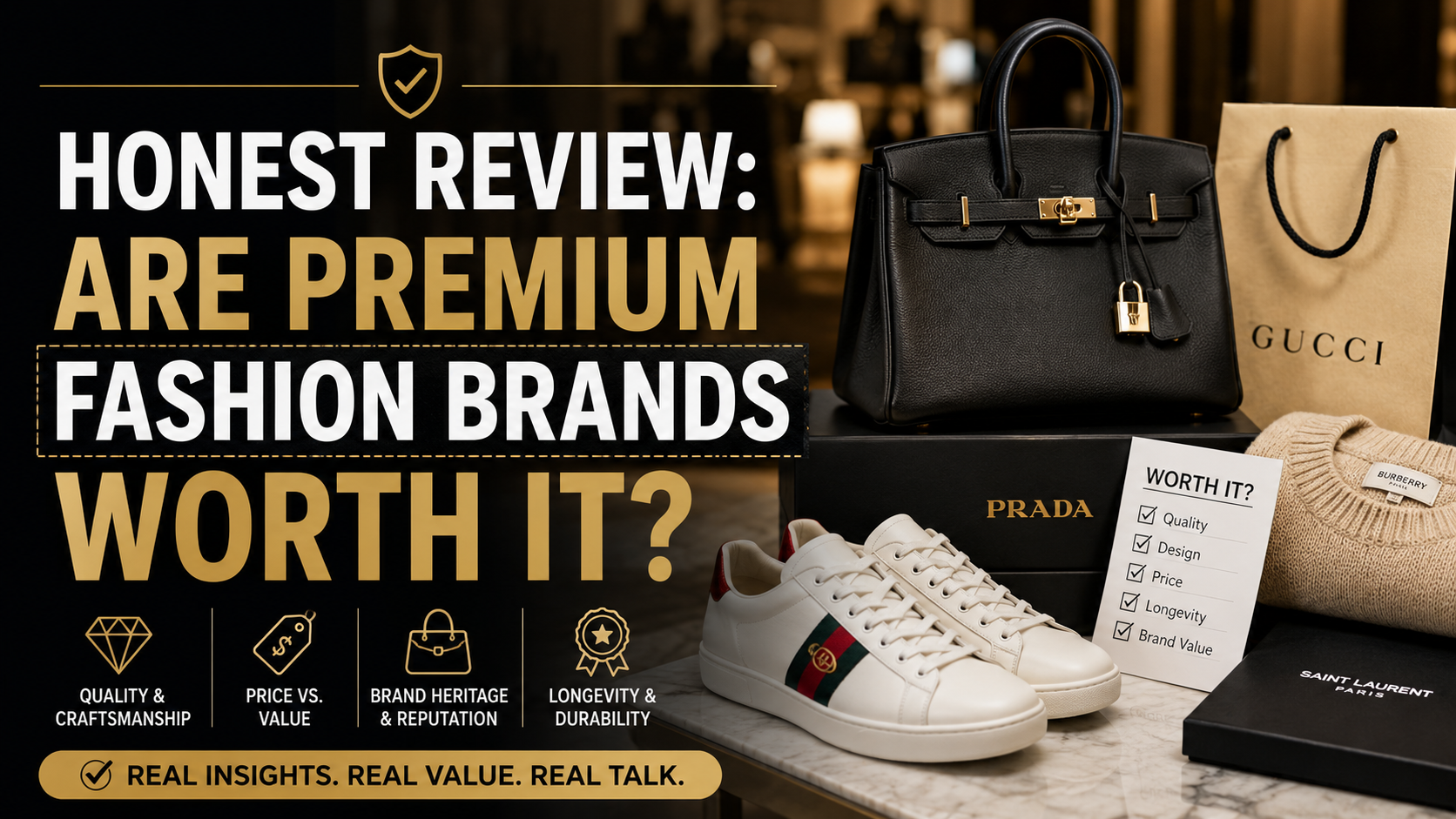
Fashion is more than just clothes. It is how people express their personality, confidence, and lifestyle. In today’s world, premium fashion brands are everywhere—on social media, in malls, and on celebrities. Names like Gucci, Prada, Louis Vuitton, Zara premium lines, Ralph Lauren, and Armani often appear as symbols of luxury and success.
But one big question always comes up: Are premium fashion brands really worth the high price?
Some people say yes because of quality and status. Others say no because similar styles can be found at much lower prices. The truth is not simple. It depends on what you value more—durability, design, brand image, or budget.
In this article, we will break down everything in a simple and honest way so you can clearly understand whether premium fashion is a smart choice or just an expensive trend.
What Are Premium Fashion Brands?
Premium fashion brands are clothing companies that sell high-quality, stylish, and often expensive products. These brands are usually placed between regular fast fashion and ultra-luxury fashion.
Simple categories of fashion brands:
| Category | Price Range | Examples | Main Focus |
|---|---|---|---|
| Fast Fashion | Low | H&M, Shein, Uniqlo | Trendy, cheap clothing |
| Premium Fashion | Medium to High | Ralph Lauren, Michael Kors, Tommy Hilfiger | Quality + brand style |
| Luxury Fashion | Very High | Gucci, Chanel, Prada | Status, exclusivity |
Premium brands focus on better materials, cleaner stitching, and more polished designs compared to fast fashion. They are not as expensive as luxury brands, but still cost much more than everyday clothing.
Why Do Premium Fashion Brands Cost So Much?
Many people feel confused when they see a simple T-shirt priced at a very high amount. But there are real reasons behind the pricing.
1. Better materials
Premium brands often use higher-quality fabrics such as:
- Organic cotton
- Fine wool
- Genuine leather
- Strong denim blends
These materials last longer and feel more comfortable.
2. Skilled craftsmanship
The stitching and finishing are usually more detailed. Workers spend more time making sure the clothes look perfect.
3. Brand value
A big part of the price is the brand name. When you buy a premium brand, you are also paying for:
- Reputation
- Trust
- Style identity
4. Design and research
Premium brands invest in fashion designers and trend research to create unique styles that stand out.
5. Marketing and store experience
High-end advertisements, fashion shows, and luxury store designs also increase the final price.
Benefits of Buying Premium Fashion Brands
Premium fashion is not just about showing off. There are real advantages that many people enjoy.
1. Longer lifespan
One of the biggest advantages is durability. Premium clothes can last years if taken care of properly.
For example:
- A premium jacket may last 5–10 years
- A fast fashion jacket may last 1–2 years
2. Better comfort
Higher-quality fabrics feel softer and more comfortable on the skin. This is important for daily wear.
3. Better fit and design
Premium brands usually focus on tailoring and fit. Clothes often look more structured and stylish.
4. Confidence boost
Many people feel more confident wearing branded clothes. It can improve self-image, especially in social or professional settings.
5. Less frequent shopping
Since clothes last longer, you don’t need to buy new outfits often.
Drawbacks of Premium Fashion Brands
Even though premium fashion has benefits, it is not perfect. There are also disadvantages that should be considered.
1. High cost
The biggest drawback is obvious—price. Many people cannot afford premium brands regularly.
2. Not always better quality
Some premium items are not much better than mid-range brands, even though the price difference is huge.
3. Brand markup
Sometimes you are paying more for the logo than the actual clothing quality.
4. Trend issues
Fashion trends change quickly. A premium outfit may go out of style after one season.
5. Risk of overbuying
People sometimes buy expensive clothes just for status, which can lead to unnecessary spending.
Cost vs Value: Is It Really Worth It?
To understand whether premium fashion is worth it, we need to look at cost per wear.
Cost Per Wear Formula:
Cost of item ÷ Number of times worn = Real value per use
Let’s compare:
| Item Type | Price | Worn Times | Cost Per Wear |
|---|---|---|---|
| Fast Fashion Jacket | $50 | 10 times | $5 per wear |
| Premium Jacket | $300 | 60 times | $5 per wear |
What this shows:
Even though the premium jacket is expensive, it can become equal or even cheaper in the long run if used more often.
Quality Comparison: Premium vs Fast Fashion
| Feature | Premium Fashion | Fast Fashion |
|---|---|---|
| Fabric Quality | High | Low to medium |
| Durability | Long-lasting | Short-lasting |
| Stitching | Strong and neat | Basic |
| Style Uniqueness | More exclusive | Mass-produced |
| Price | High | Low |
| Sustainability | Better | Often wasteful |
Style and Social Value
Fashion is not only practical—it is also social.
1. First impressions matter
In interviews, events, or meetings, clothing can affect how people see you.
2. Brand recognition
Some premium brands are instantly recognized, which can influence social perception.
3. Confidence and identity
People often feel that premium clothing reflects success or maturity.
However, it is important to remember:
Clothes do not define your worth.
Are Premium Fashion Brands Sustainable?
Sustainability is becoming a big topic in fashion.
Premium brands often:
- Use better materials
- Produce fewer items
- Focus on longer-lasting designs
But some still have issues like:
- Overproduction in luxury lines
- High resource usage
- Global shipping impact
Overall, premium fashion is usually more sustainable than fast fashion, but not always perfect.
When Premium Fashion IS Worth It
Premium fashion makes sense in these situations:
1. Work or professional settings
If you need polished outfits for office, meetings, or presentations.
2. Long-term wardrobe building
If you prefer fewer but high-quality clothes.
3. Special occasions
Weddings, events, and formal gatherings.
4. Personal comfort preference
If you value comfort and fabric quality.
When Premium Fashion IS NOT Worth It
It may not be worth it if:
- You follow trends quickly
- You change style often
- You are on a tight budget
- You wear clothes casually and don’t care about brands
In these cases, mid-range or affordable fashion gives better value.
Smart Shopping Strategy for Fashion Lovers
Instead of choosing only premium or only cheap clothing, a balanced approach works best.
Suggested wardrobe strategy:
- 60% basic affordable clothing
- 30% mid-range quality items
- 10% premium statement pieces
How to Decide Before Buying Premium Clothes
Before spending money, ask yourself:
- Will I wear this at least 30–50 times?
- Does this match my current wardrobe?
- Is the quality clearly better than cheaper options?
- Am I buying it for style or for status?
- Can I afford it without stress?
If most answers are “yes,” then it may be a good purchase.
Common Myths About Premium Fashion
Myth 1: Expensive means best quality
Not always true. Some mid-range brands offer similar quality.
Myth 2: Premium clothes always last forever
They last longer, but still need proper care.
Myth 3: Wearing brands makes you more successful
Success comes from skills and personality, not clothing.
Myth 4: Cheap clothes are always bad
Some affordable brands offer excellent durability and design.
Real-Life Example Comparison
Imagine two people:
Person A:
- Buys cheap clothes every month
- Spends $600 yearly
- Clothes wear out quickly
Person B:
- Buys fewer premium clothes
- Spends $600 yearly
- Clothes last 3–5 years
Over time, Person B may have better wardrobe quality with less effort.
Simple Graph: Value Over Time
Durability & Value

Premium Fashion  | ████████████████████
Mid-range Fashion | ███████████████
Fast Fashion      | ██████
Premium fashion may start expensive, but value increases over time.
Final Verdict: Are Premium Fashion Brands Worth It?
The answer is:
Yes and no—it depends on how you shop and what you expect.
Premium fashion is worth it if you care about:
- Long-lasting clothing
- Better comfort
- Clean design and fit
- Fewer but better pieces
But it is not worth it if you:
- Follow trends daily
- Want low-cost fashion
- Change styles often
